If the 19th century had prospectors racing to California and Nevada with pickaxes and pans, the 21st century has tech giants racing to the same sun-baked deserts armed with billions of dollars and an insatiable hunger for electricity. This time, they aren’t mining gold; they’re mining compute.
Welcome to the AI Gold Rush.
Drive an hour east of Reno, and you’ll arrive at the Tahoe Reno Industrial Center, one of the largest industrial parks in the world, largely thanks to Tesla’s Gigafactory. Alongside this, a growing array of gleaming white data center buildings bear the logos of Microsoft, Google, Amazon, and Meta. Switch’s Citadel Campus alone is pushing toward 7 million square feet of data center space, powered by what will soon exceed 1 gigawatt of electricity—approximately the output of a large nuclear plant.
Further south, in Storey County, the desert floor is being flattened for OpenAI and Microsoft’s rumored “Stargate” supercomputer project. This facility could eventually require 5 gigawatts or more when fully operational, enough power for roughly 4 million homes.
McKinsey now projects that global spending on AI infrastructure could reach $7 trillion by 2030, almost double the entire GDP of the United Kingdom. A significant portion of that investment is flowing into Nevada, Arizona, Utah, and eastern Oregon—regions that offer cheap land, lax regulations, and, until recently, abundant renewable-energy tax credits.
The key players in this rush read like a who’s who of hyperscalers:
– Microsoft has already invested or committed over $8 billion in Nevada alone.
– Google has broken ground on a $1 billion campus near Reno and another $3+ billion project outside Las Vegas.
– Meta is constructing a 1.5 million-square-foot AI data center in Elko.
– Amazon Web Services has just announced a $10 billion expansion in Arizona and is scouting additional sites across the Intermountain West.
Local officials are thrilled. Each new campus brings thousands of construction jobs, millions in tax revenue, and the promise of a “knowledge economy” to replace declining mining and tourism sectors.
Power and Water
However, this boom comes with two significant caveats: electricity and water.
Power: The Grid Is Groaning
Nevada’s utility, NV Energy, is struggling to keep up. The state’s current peak demand is around 8 GW. Approved and proposed data centers alone could add another 15 to 20 GW in the next decade—equivalent to adding two entire Californias to the grid.
Utilities are now urging hyperscalers to generate their own power, using on-site natural gas turbines, solar farms, or even small modular nuclear reactors. Black & Veatch estimates that the U.S. will need an additional 50 to 100 GW of new power generation solely for data centers by 2030.
Water: The Invisible Crisis
Less recognized but equally critical is the need for cooling. Traditional data centers consume vast amounts of water for evaporative cooling. In water-scarce Nevada, some facilities already use millions of gallons per day, equivalent to the consumption of thousands of households.
While newer air-cooled and immersion-cooled designs help mitigate this issue, the scale is staggering. A single large AI training cluster can generate as much heat as a small city. In Arizona, Google’s Mesa data center has become a political flashpoint, with locals frustrated that it uses more water annually than some nearby towns.
This isn’t just a Nevada story or even an American one. Similar land rushes are occurring outside Dublin, in the deserts of Saudi Arabia, and along the foggy coast of Chile, where cold Pacific water helps with free cooling.
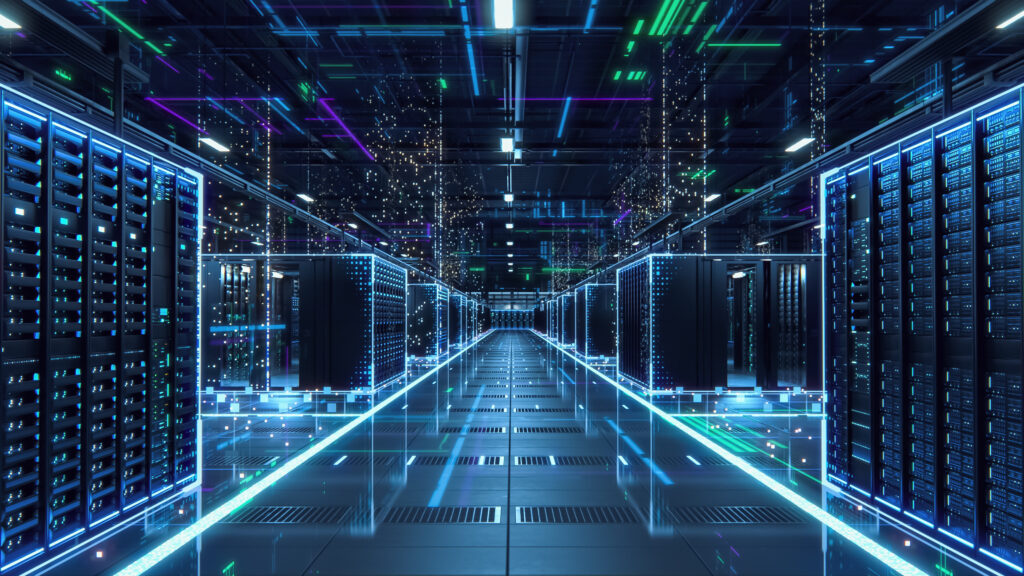
What we are witnessing is the physical manifestation of the AI revolution. Large language models and frontier AI systems aren’t built in the cloud magically; they’re constructed inside warehouses the size of several Costcos, filled with hundreds of thousands of GPUs that collectively consume more power than entire industries did a decade ago.
History tells us that gold rushes end one of two ways: sustainable cities (like San Francisco and Denver) or ghost towns littered with abandoned claims.
The American West now faces a similar question.
If power issues can be addressed through a mix of renewables, next-gen nuclear energy, and grid-scale batteries, these desert silicon oases could become the steel mills and assembly lines of the AI economy.
If not, we may look back at the 2020s as the decade we paved paradise to train models that primarily produce better marketing copy and generate pictures of cats in spacesuits.
In either scenario, the picks and shovels this time aren’t sold in hardware stores. They’re provided by Nvidia, TSMC, and the few utilities still able to get a new substation approved before 2030.
The rush is on. Let’s hope it leaves us with something more enduring than fool’s gold.