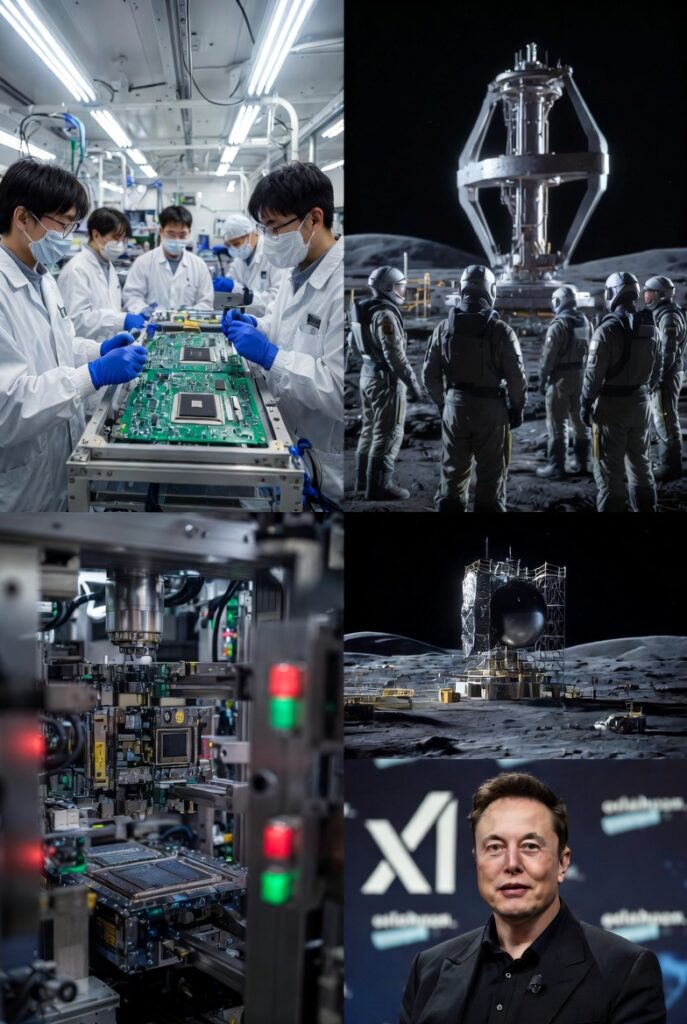
The AI hardware battlefield is splitting into two wildly divergent fronts: one grounded in pragmatic, nation-state survival tactics, the other blasting off into orbital and lunar ambition. These aren’t side stories, they’re the defining clashes of 2026’s compute wars.
1. ByteDance’s Bold Bid for Chip Sovereignty: Breaking Nvidia’s Grip Amid Export Controls
Fresh off Reuters’ exclusive bombshell today (Feb 11, 2026), ByteDance, the TikTok parent is actively developing its own AI inference chip and negotiating intensely with Samsung Electronics for manufacturing support. This isn’t rumor; sources confirm ByteDance targets engineering samples by the end of March, with plans to ramp production to at least 100,000 units in 2026 potentially scaling to 350,000 over time.
The chip focuses on inference workloads (running trained models efficiently, crucial for real-time apps like Douyin/TikTok recommendations, content moderation, and emerging enterprise AI services). Why now? Escalating U.S. export controls have choked access to cutting-edge Nvidia GPUs (H100/H200/B-series restricted for China), forcing Chinese giants to pursue self-reliance. ByteDance’s broader AI procurement budget for 2026? A massive over 160 billion yuan ($22-23 billion USD), with more than half historically earmarked for Nvidia chips but now diversifying aggressively.
Key negotiation perks: ByteDance is pushing for priority access to scarce high-bandwidth memory (HBM) from Samsung, the ultra-high-speed DRAM that’s the lifeblood of modern AI accelerators. Global HBM supply is insanely tight due to the hyperscaler build-out; whoever locks in allocations gains a huge edge. Samsung, already ramping HBM4 production (with Nvidia as a prime customer), could provide foundry services plus memory priority making this a strategic lifeline for ByteDance.
Implications ripple far:
- For China: Accelerates “de-Americanization” of AI stacks, bolstering domestic tech resilience.
- For ByteDance: Cheaper, more controllable inference at massive scale could supercharge TikTok/Douyin algorithms, cloud offerings, and Seed AI models.
- For the industry: Heightens chip wars tension Samsung risks U.S. scrutiny for aiding Chinese AI ambitions, while Nvidia faces more competition in inference (a growing market segment).
ByteDance has downplayed some reports as “inaccurate,” but the Reuters sourcing is solid and aligns with their prior heavy Nvidia spends ($14B planned on H200s if approvals allow). This is classic pragmatic sovereignty play: build your own to hedge against bans.
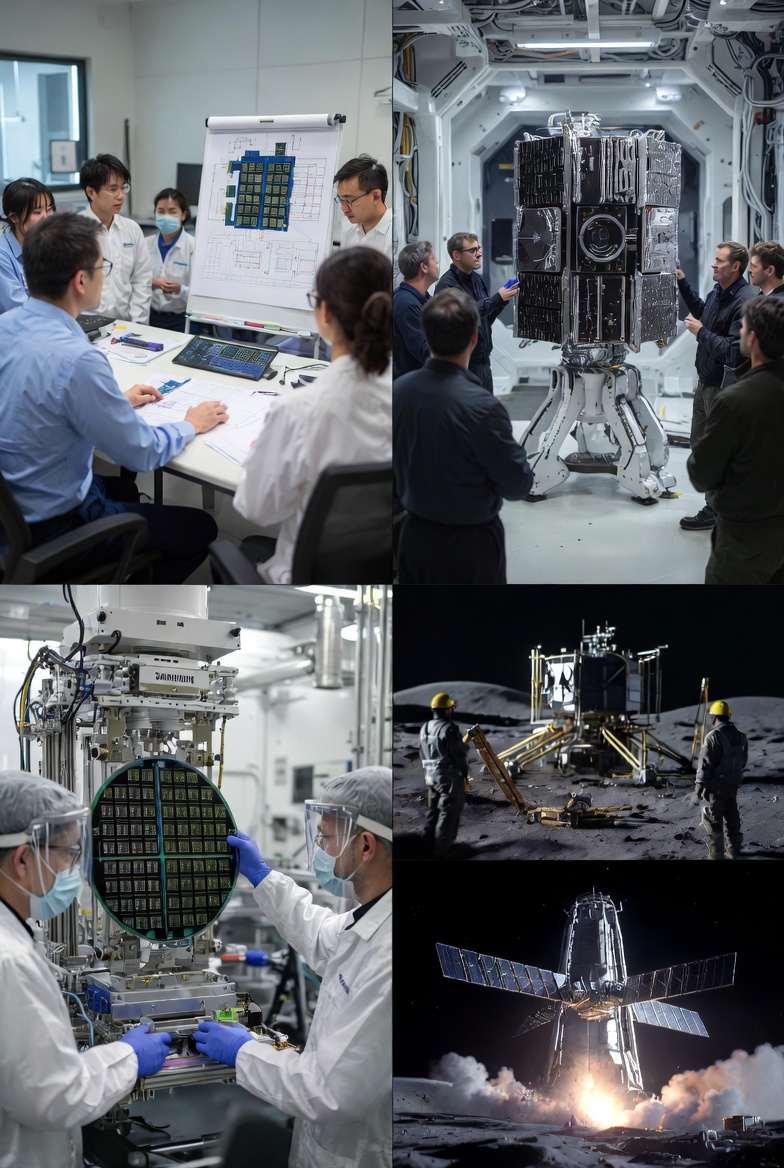
2. Elon Musk’s Lunar Leap: Moon Factory, Mass Driver, and Terawatt-Scale Orbital AI
On the opposite extreme, Elon Musk dropped a sci-fi bombshell in an xAI all-hands meeting (reported by NYT and others Feb 10-11): xAI needs a factory on the Moon to manufacture AI satellites, launched via an electromagnetic “mass driver” (a giant railgun-style catapult) for cheap, high-volume deployment.
This ties directly into the recent SpaceX-xAI merger: combining rockets, Starlink tech, and Grok AI to pursue space-based computing as the ultimate scaling path. Musk’s vision:
- Build millions of solar-powered orbital satellites functioning as distributed data centers.
- Target up to 1 terawatt/year of AI compute (that’s 1,000 gigawatts—orders of magnitude beyond current Earth grids).
- Why the Moon? “It’s always sunny in space” constant solar without night/weather, reduced cooling needs (vacuum helps dissipate heat), and lower launch costs via mass driver (electromagnetic acceleration using lunar resources like silicon/aluminum for panels and structures).
- Scale math: Launch 1 million tons/year of satellites (each 100 kW/ton compute) → 100 GW/year initially, scaling to terawatts via lunar manufacturing. Musk calls it a step toward Kardashev II (harnessing a star’s full output).
Musk frames it as inevitable: Earth grids/water can’t sustain explosive AI growth without blackouts or massive societal costs. Orbital/solar-powered compute could become the cheapest way to run AI in 2-3 years, sidestepping terrestrial limits.
Critics slam it as fantasy technical hurdles (lunar fab precision, radiation hardening, latency for Earth comms), insane costs, environmental unknowns, and regulatory nightmares. Believers see it as genius: bypass grid bottlenecks, leverage Starship’s payload monster status, and position xAI/SpaceX for multi-planetary dominance (Moon as stepping stone, some Mars focus shifted for faster lunar wins).
These stories collide in perfect symmetry:
- ByteDance: Grounded, urgent chip independence to survive today’s restrictions.
- Musk/xAI: Audacious, physics rewriting orbital future for unlimited tomorrow.
Together, they scream one truth: AI hardware dominance now spans silicon sovereignty, national strategies, and rewriting orbital physics. The race isn’t just for better chips it’s for who controls the next era of intelligence at planetary (and beyond) scale.
Which path fires you up more the gritty chip war on Earth or the lunar-orbit moonshot? Or do both scare you for different reasons? Drop your take below. Frontier intel keeps dropping stay locked in